
Free Writing
It's all they say it is and more

I started thinking more about our last conversation regarding free writes and free writing; I told you what my specific process was regarding a couple of prompts, but we never explored what I think about free writing in general. Let me remedy that.
When I was in college, working on my first, English degree (concentration in poetry) in the early 1990s, this was a technique used by one of my favorite poetry professors: 10 minutes, keep your hand moving, doesn’t matter what you do or don’t write: go! Professor Ken Norris, you gave me so much foundationally: thank you. Between Professor Norris and Natalie Goldberg, I learned to use free writing to delve into that boundless plethora of the mind.
I like to think of free writes as seeds that could bloom into a dozen different flowers. To use this tool as effectively as possible, make sure you aren’t giving your “monkey mind” free reign—always write with a pen or pencil and always keep your hand moving, even if you write “I don’t know what to write” for three lines—the thought will eventually form and take on a life of its own. Practice enough and sometimes you won’t even need to write “I don’t know what to write.” Another good trick, if you start to go blank, is write, “What I really want to say is…” and that can kick your brain into getting out of its own way. A last way to approach getting out of your own way is to simply write the prompt over and over which can help redirect the monkey mind.
When you’ve got a few notebook pages of free writing done, what next? You may have half of what you’ve written littered with “I don’t know what to write’s” or “What I really want to say is,” twenty times. No worries—write or type the grain separate from the chaff.
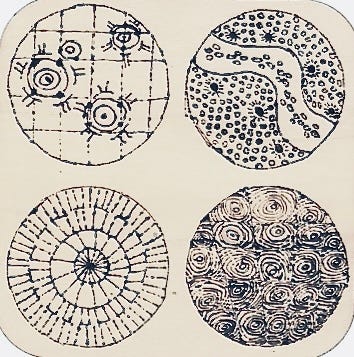
What then? You won’t have a complete poem or piece of fiction, barely a coherent paragraph of an essay—but you will have one or two seeds. And from that you can plant and grow the flowers. Sometimes this will be easy and sometimes it won’t—it’ll depend on the subject, whether you ate your favorite meal or got enough sleep, it’ll depend on whether your preferred deity has smiled down upon you—you get the idea.
There are many different ways to push your creativity and vision farther, but the choices themselves can be overwhelming. Here are some ideas to try if you haven’t got a tried-and-true method or if you simply want to try something new. Keep in mind, this process usually requires some risk-taking; the goal is to dig deeper into yourself and your writing. Here are some ideas I’ve played with over the years to develop my free writes:
• Rewrite from the perspective of a child, elderly person, a different gender or someone who has recently immigrated to the US.
• Mark inspirational phrases or sentences and write more on each segment to delve deeper.
• Rewrite from a different point in time.
• Rewrite using a different voice (for example, from third person to first).
• Place the event in a different setting (from a forest in the Northeast to a jungle in South America).
• Draw or paint your free write or the emotions it evokes.
• Sit down with your free write and make friends with it; have a conversation with lots of questions.
• Meditate after having read it aloud.
• Read a magazine or newspaper article and find passages which feel inspirational/ important to you, marking them. What do they have in common with what you wrote?
• Do a collage of your free write.
• Type it up, print it, then cut it into words or phrases or whole sentences and mix it around. Paste it on index cards.
Were there any suggestions that filled you with apprehension? Those are the ones which will most likely bring you to a greater unknown place and will lend itself to pushing you to develop your writing further. (Ask me how I know.) Messiness is part of the process, of course, and keep in mind, you will not respond to all of your free writes in the same manner; some will have greater appeal to you, others will not. At a later time, some may give you answers or directions, but will appear to be lifeless right now. Have patience. And have confidence the free write will tell you which direction to try. Always remember, it is the process that informs us. Even if you have an end-goal, that doesn’t mean your end-product will resemble your original vision. This isn’t necessarily a disastrous outcome.
Do you find the use of free writes beneficial when you are beginning to explore a topic? When you become stuck in a project? Do you use them in a different way than I’ve suggested? Please share!